USS Indianapolis CA-35

Lost At Sea

Edward Richard LORENC

Name: Edward Richard LORENC
Rank / Rating: S2-Seaman Second Class
Service #: 314 62 64
DOB: 1928
From: Detroit, MI
Parents: Mark Anthony and Sophia Dutkiewiz Lorenc
Went Aboard: May 12, 1945
Age When Ship Went Down: 17
Spouse:
Children:
Grandchildren:
Bio Submitted By: Patricia Stephens (Admin)
Date Posted: Dec 7, 2025

Project 888
Photo(s) Needed
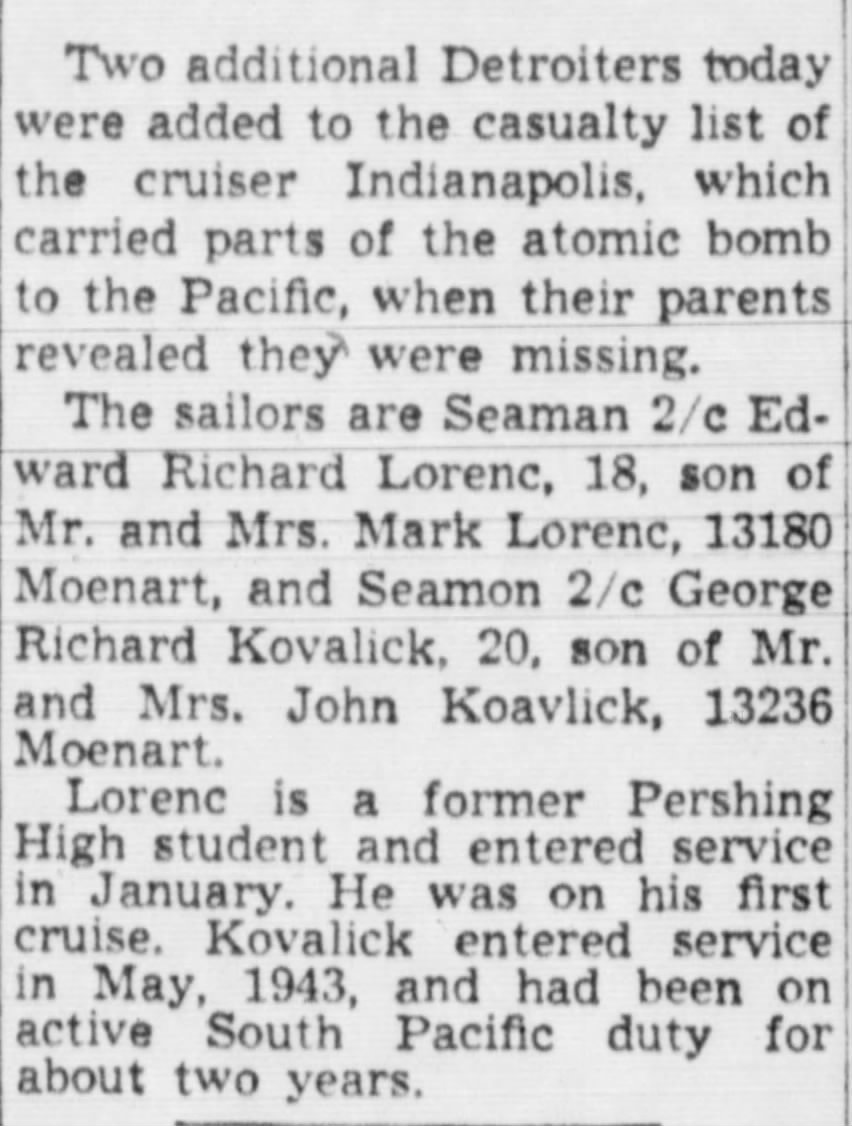
Edward was the son of Mark Anthony and Sophia Dutkiewiz Lorenc. Mark was born in 1895 and Sophia in 1899, both in Poland. The 1930 census for Detroit, Wayne Co., MI, recorded Mark and Sophia with Edward, age 2 and his two sisters, Wanda age 5 and Genieve age 1 year, all born in MI. The family remained in Detroit and were noted on the 1940 census. Edward was now 12 yo and in addition to his two sisters, he now had a younger brother, Robert, born c1937. The family reported that they were living in the same location on April 1, 1935. Edward attended Pershing High School, Detroit. His name was not found on the senior roll of 1944 or 1945, the earliest available to this researcher. However, the 1946 "Pershing Parade" senior annual contained a Roll of Honor of those who died in service, but no reference is given to the year the deceased attended or graduated from Pershing. Edward's name is on the list.
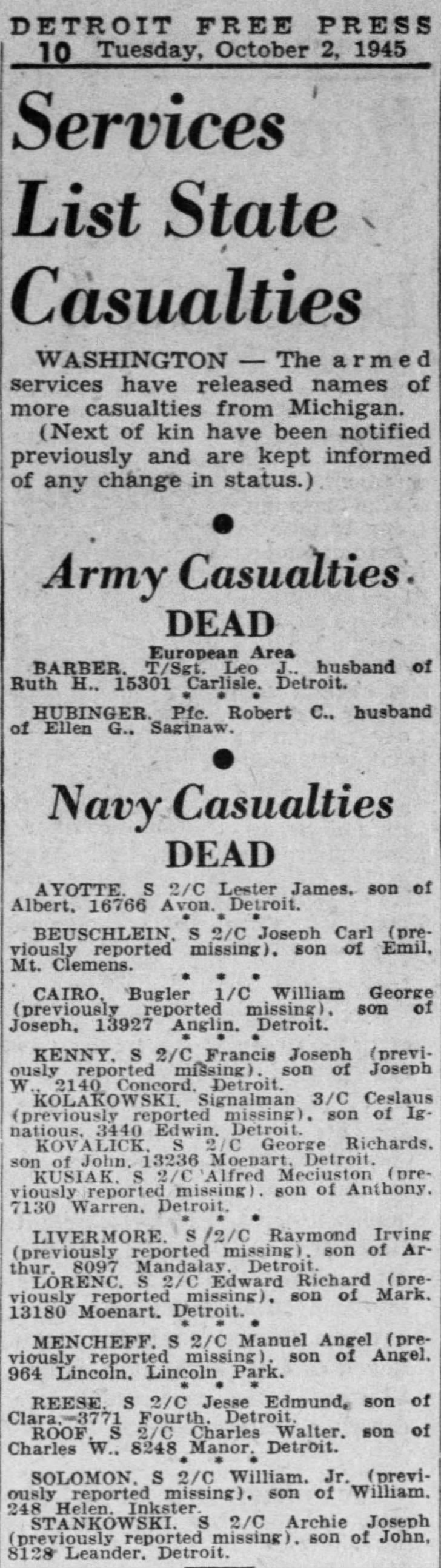
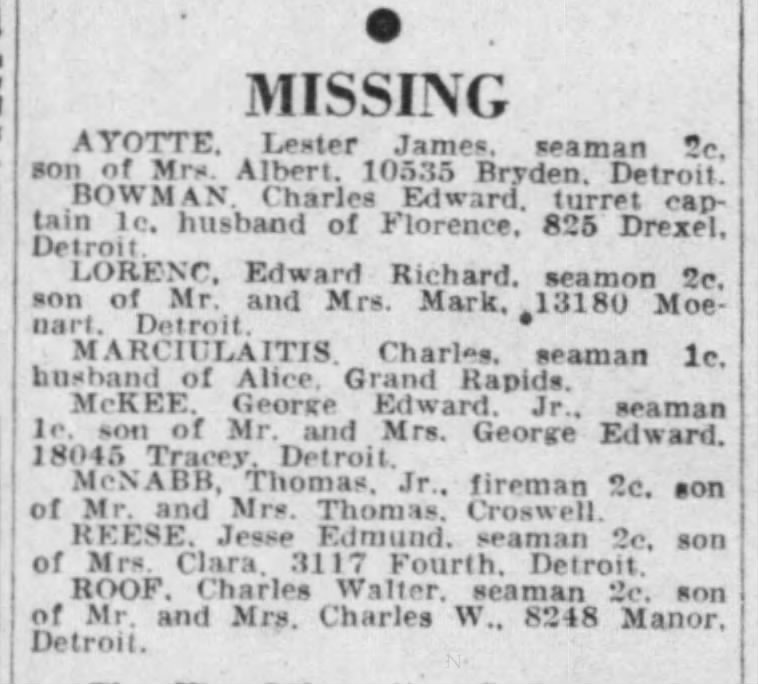
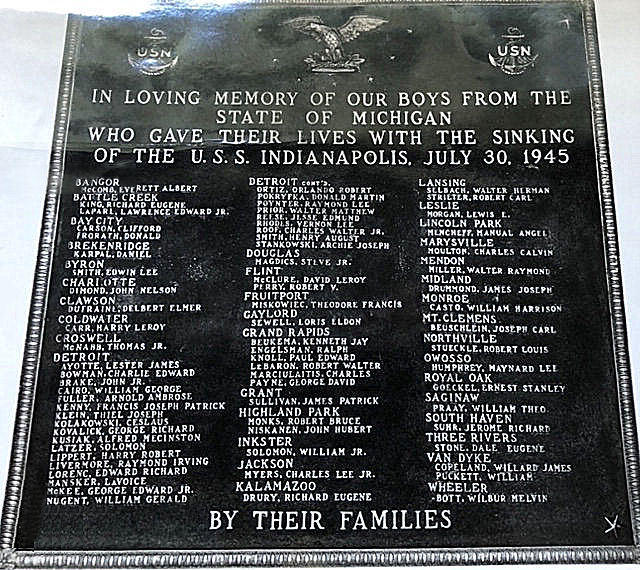
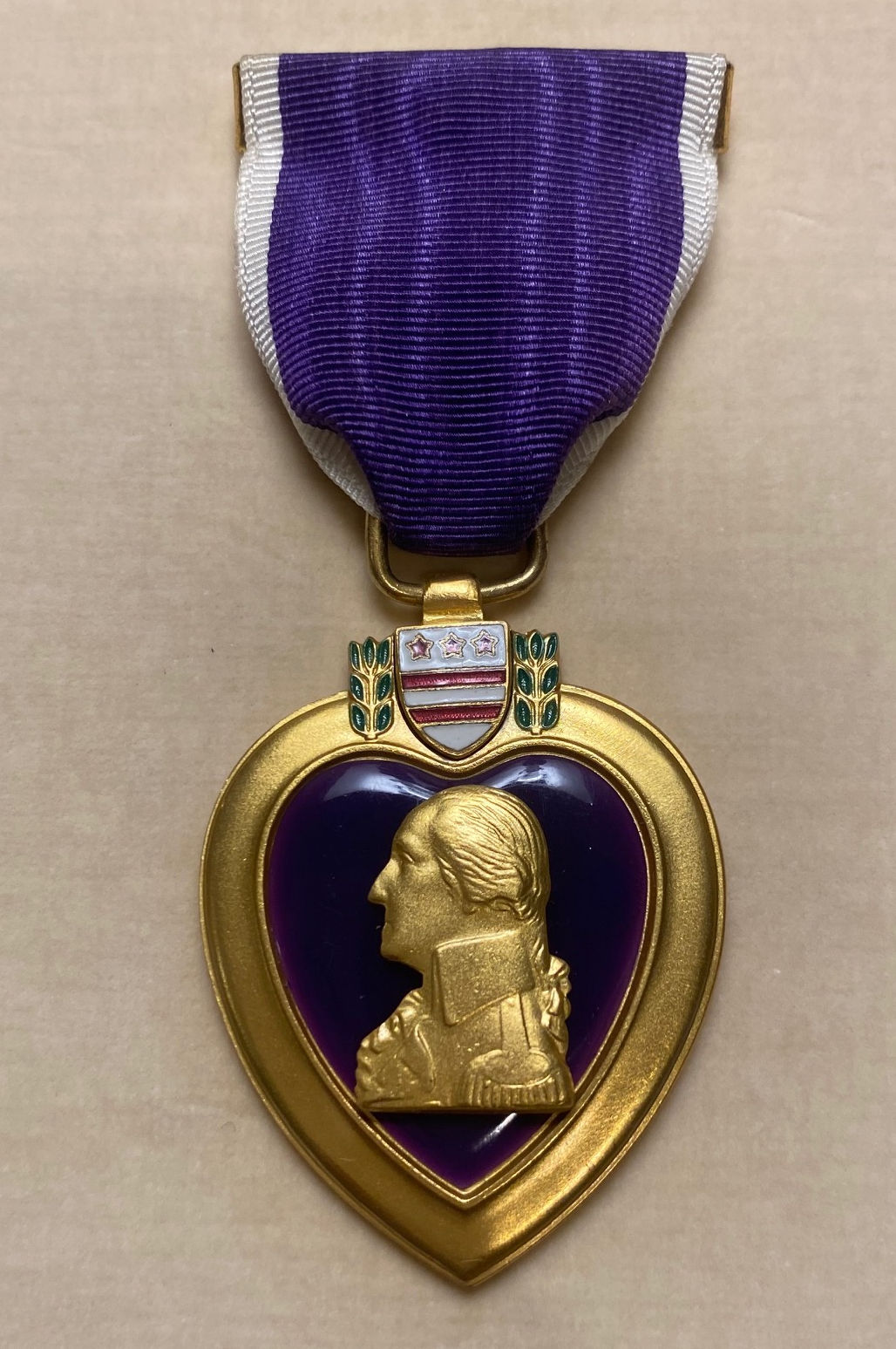
Edward enlisted in the USN, not the USNR, in Detroit, MI. No draft registration card was found for Edward. It is most probable that he was only 17 years old, therefore he never registered for Selective Service which required the registrant to be 18 year old. The signing of Executive Order 9279 by the President in December 1942 terminated voluntary enlistment for men aged 18-37. The Navy subsequently relied in large part on 17-year-old volunteers not yet of draft age, according to the Selective Service Regulations in 1943. An article in his hometown newspaper reported that Edward was 18 years old at the time of his death. This could establish that he turned 18 between early Jan and July 30, 1945. Edward arrived Jan 20, 1945 for basic training at Great Lakes, IL. While there, his rate advanced from AS (Apprentice Seaman) to S2c (Seaman 2nd class) on April 11, 1945. He was transferred to the Naval Training and Distribution Center, Shoemaker, CA, on April 23rd. He likely traveled by train to CA where he arrived on April 27th. His time there would be brief before he traveled to Mare Island, Vallejo, CA, for his first duty assignment. On May 12, 1945, Edward saw his ship for the first time. USS Indianapolis CA-35 had limped several thousand miles back to Mare Island for repairs from a kamikaze attack off Okinawa on March 31, 1945. She arrived at San Francisco then forward to Mare Island on May 2, 1945. In addition to repairs, the ship would be overhauled, refitted and painted inside and out over the next two-and-a-half months. As Edward walked the dock he did not expect to see what he saw. There was his new ship, but not in the water. She was resting on massive wooden keel blocks designed specifically for her hull and labeled with her name. Yard workers were busy repairing two holes in the bottom of her keel as well as one on her deck on the port quarter that had been temporarily repaired by USS Clamp ARS-33 at Kerama Retto and additional emergency repairs at Guam. The repair was accomplished by cutting out and replacing the entire portion of the port quarter from the main deck to the keel. Other workers were repairing two of the heavy cruiser's propeller shafts as well as other vital projects. He walked the gangway and was granted permission to come aboard. Part of the enlisted and officers were kept on board even in dry dock. With much work to be done, Indy would remain on blocks until June 22nd. It is not known if Edward remained on board. The exact date is not known but most of the crew and officers were moved to housing at the navy yard and likely due to the need for repairs to an enlisted berthing compartment and mess hall. Some married enlisted men found local housing or a hotel where their wives could join them during the extended time in port. Many men were granted leave while others attended training schools to advance their skills for further rate and rating advancement. It was a time of organized chaos for the crew. When the ship was floated out of dry dock, more crew would spend their time on board assisting yard workers with repairs and attending to everyday duties and upkeep. Each division had a job to do and no one was exempt. Edward was not likely the only man on board with a bewildered look on his face. While Indy was at Mare Island, over 250 new enlisted crewmembers came aboard, most like Edward, straight from boot camp to replace the men who had left the ship when she arrived for repairs. They were all likely unsettled by the condition of their new ship. In addition to new enlisted men, new officers had arrived and accounted for almost half the complement which was now over the number normally on board. Twenty Ensigns were straight from midshipmen's school or the Navy Academy. They were officers, but every bit as "green" as Edward. Chipping paint and rust was one of those jobs that nobody wanted but had to be done before Indy could receive her new inside paint and outward camouflage pattern. This was likely a job assigned to new crewmembers of the lower rates and ratings, like Edward. The crew would also assist with the painting. When on board, Edward would hear the sounds of banging, hammering, chipping and witness the fire from torches against the steel hull 24 hours a day. The decks, which covered the length of two football fields, were an obstacle course of men and equipment. Sleep was a luxury and dust and other debris covered every surface. When would he get to become a real sailor and travel the high seas? He did not know. For two months he had been stuck in harbor Hell, but that was about to change. On July 12, 1945, with work not yet completed, Capt. Charles Butler McVay, III, received an unexpected and somewhat bewildering order to have Indy ready to depart the US no later than July 16th. Telegrams were sent ordering crewmembers and officers to return to the ship immediately. All leave and service school training was cancelled. With most of the crew back on board, as well as yard workers, Capt. McVay ordered the crew to ready for departure on Saturday morning, July 14th. He took his ship on a brief trial in an attempt to not only test the ship's repairs, but give the green crewmembers, totally almost 25 percent of the complement, some degree of training. The exercises included speed runs, emergency turns, full backdown as well as radar, radio and fire control procedures. Edward was likely overwhelmed with this crash course at sea. He would be thankful that the seas were calm. The next morning, Indy put back into Mare Island and a few hours later, Capt. McVay received his final orders. He was to depart Mare Island that morning for Hunter's Point Navy Yard in San Francisco Bay where he would receive top-secret cargo for transport to the island of Tinian in the Northern Mariana Islands. McVay was not told the contents of his cargo, so no one else on board knew. Rumors were rampant among the enlisted. All they knew for sure was the ship would travel at flank speed because time was of the essence to get to Tinian. Edward could not have imaged what this really meant. In the early morning hours of July 16, 1945, Indy prepared to depart Hunter's Point. By 8:30 a.m., she was outside San Francisco harbor. A few hours later, Indy hit rough seas with swells of fifteen feet. Even with a slight reduction in speed, with each wave the ship rose then suddenly slammed into the troughs with a violent jarring along with a roll from side-to-side. The old salts on board had experienced a much worse ride, but Edward was not likely reassured by their calmness and secretly feared for his life. The next day, the weather improved and the screws of the four massive engines were pushing the ship along at an average of 29 knots. Indy shuttered as she plowed through the warm water, her engines almost at their limits. Arriving at Pearl Harbor, Edward would long for just a few hours on dry land. It was not to be. No one was allowed to go ashore. But, there was good news. Indy had steamed, averaging 29.5 knots, over 2,000 nautical miles in 74.5 hours from the Farallon lightship at San Francisco to Diamond Head, Oahu, TH, setting a new time record. Indy refueled and continued her mission. Her secret cargo was off loaded at Tinian on July 26th. Before departing that afternoon, McVay received orders to proceed to Guam, 120 miles south of Tinian. The next morning she arrived at Apra Habor, Guam, where McVay received routing orders for her final destination - Leyte in the central Philippines Indy departed Apra Harbor the next morning, Sunday, at 9:00 a.m. Half-way to Leyte, on July 30, 1945, Indy was struck by two torpedoes from Japanese submarine I-58 and sank in 12 minutes. Whether Edward made it off the ship and into the water is not known. Edward Richard Lorenc, S2c, had served on board Indianapolis for 80 days. He was only 18 years old when he gave all to his country. His name is inscribed on the Tablets of the Missing in the Manila American Cemetery, Fort Bonifacio, Taguig, Philippines. He was awarded the Purple Heart, posthumously. Edward, you are not forgotten. On Sept 4, 1945, Edward's mother wrote a letter to McVay begging for more information about the sinking and death of her son. She was clinging to hope that her son was still alive.
Source Credits
Michigan Marriage Index; citing Mark Anthony Lorenc & Sophia Dutkiewiz. US, District Court, Michigan, Eastern District; Petition for Naturalization; citing petition of Nov 1926 for Sophia Lorenc, born Poland and immigrated from Hamburg, Germany. Had lived in Michigan for 15 years. Naturalized in April 1927. Husband, Mark, b. 1895, Poland, naturalized in Michigan Jan 11, 1926. One child Wanda b. Jun 23, 1924, Hamtramck, Michigan. 1930 US Census, MI, Wayne Co., Detroit. Enumerated Apr 12, 1930. HH #13414, Fenelon Avenue; citing the family of Mark Lorenc. US Census, Michigan, Wayne Co., Detroit, ward 13. Enumerated Apr 13, 1940. HH #13180, Moenart Street; citing family of Mark Lorenc. United States. Selective Service System. (1946). Registration and selective service. Washington: U.S. Govt. Print. Office. USN WWII Muster Rolls, 1938-1949; Ancestry database. USN Ships, Stations and Other Naval Activities, 1939-1949; Ancestry database. USN USS Indianapolis CA-35 Final Sailing List, 17 Aug 1945; Ancestry database. National Archives & Records Administration, Pacific Region, San Francisco, Record Group 181, Pearl Harbor Navy Yard General Correspondence Files, 1941-45. Declass NDD 868129. Detroit Evening Times, Wed, Aug 29, 1945, p. 4; citing Edward Richard Lorenc MIA Detroit Free Press, Tues, Sept 11, 1945, p. 5; citing list of Michigan sailors MIA. Detroit Free Press, Tues, Oct 2, 1945, p. 10; citing death of Edward Richard Lorenc. Moore, Katherine D. (1991). Goodbye Indy Maru. Lori Publications, Knoxville, TN Vincent, L., & Vladic, S. (2018). Indianapolis: The true story of the worst sea disaster in U.S. naval history. Simon & Schuster, New York. Stanton, D., & Tougias, M. (2022). In Harm's Way: The sinking of the USS Indianapolis and the extraordinary story of its survivors. Henry Holt, NY. Navy Department, Casualty Section, Office of Public Information (1946): Combat Connected Naval Casualties, WWII, by States; Vol. AL-MO; Michigan, p. 20, citing Edward Richard Lorenc, S2c, USN, s/o Mark Lorenc.
We welcome your submission of additional biographical Information and/or photo(s) to further enhance Project 888's posting for Edward LORENC. Please use the "Upload Bios" in the menu for biographical information and the "Upload Photos" to submit photos.

Photos / Clippings / Other
Project 888Project 888Project 888Project 888Project 888Project 888
Project 888


End List - Total: 888